Monday, April 7, 2014

Best Picture Winners: Gentleman's Agreement


I'm back with another Best Picture Winner post. This time it's Gentleman's Agreement starring Gregory Peck. I wasn't planning on seeing this today, but it ended up being the perfect opportunity since it is Gregory Peck's birthday... 

Well this movie had a lot to offer and there's a reason why it won Best Picture in 1947. Gregory Peck plays Philip Schuyler Green, a reporter who is given an assignment to cover a story on anti-Semitism. He feels what better way to actually know what it's like to be a Jew than to pose as one, so that is just what he does.

In posing as a Jew, he encounters hate and bigotry right away. His anger at the way he's being treated causes problems in his relationship with Kathy (played by Dorothy McGuire) who is the publisher's niece and the one who suggested the story.

It causes problems because with the "Gentleman's Agreement," which is shared in polite society that the biased attitudes between Christians and Jews is a conspiracy of silence, allowing prejudice to thrive. Kathy is upset by the pretense in order to get at the truth of hypocritical treatment the Jews suffer. The fact that she comes from a Christian Connecticut family causes strain as well.

When Phil's friend Dave (played by John Garfield) comes to town and finds out about Phil posing as a Jew, he warns him that he has let him and Phil's son, Tommy, in for a quiet onslaught of prejudice.

I also really love Celeste Holm's performance as Anne Dettrey. She is so cheerful and then tells Phil how she feels there needs to be action, and how she's tired of being just saying they are tolerant, but don't actually do anything to help the problem, and by doing that it makes it worse. I just really loved seeing how we see this side of the character that wasn't expected.

I love the scene where Elaine Wales, who is the secretary, finds out that he isn't really Jewish and is in fact Christian. That he is the same person as he as always been, but she just knows this about him. He tells her that she can't understand why someone would give up the glory of being a Christian to be a Jew is anti-semitism and that it doesn't matter what the race, it's the person that matters.

That is what I love about these classic films: the fact that these types of issues are addressed and how relevant they still are now. While they were controversial for the time, they are important films to see. They address the things that most people are afraid to talk about, the actors do it with such sincerity and Gregory Peck proves that.

Well Dave ends up talking to Kathy about things and gets to her understand Phil's point of view and they make up at the end.

Gentleman's Agreement is a truly wonderful film and it lets us all know how people and love are what should matter, not what race they are.

Saturday, February 22, 2014

JAG: Each of Us Angels

I have decided to start doing TV posts along with my movie reviews because I am very knowledgeable with TV. For the most part I watch a lot more TV shows than I do movies, and wanted to write about episodes that speak to me, or that need to be written about because they're so good.

Since JAG is a military show, there are episodes that pay tribute to past wars. This particular episode, "Each of Us Angels", does just that by honoring the Navy Nurses during World War II. The episode is told through flashbacks to the time of The Battle of Iwo Jima in 1945. Taking place on a ship offshore, the story is shared by an elderly man to a young girl.


The Navy Nurses would fall for the soldiers that were brought in, and the man whose name is Ron Graham (David James Elliott plays young Lt. Graham) goes to the Arlington National Cemetery to put flowers on the grave of the Nurse who he fell in love with. He sees this young girl there and shows her a picture of the nurses, and that’s when he tells her the story. Ens. Beverly Tromatore (the woman that Ron falls for) takes a particular interest in Ron. She talks to him and tells him to wake up…

When he does, he remembers her. One of the men that was part of his group was severely burned, and ends up dying. Ron feels like he will lose whoever he cares about or tries to protect, which is why he’s hesitant (at first) to be with Beverly. She basically tells him that she is her own person, and doesn't need him to carry her because, as she tells him: "I don't need you to carry me. I can walk with you." Leading into a Luciano De Crescenzo quote that the title of the episode comes from. “We are each of us angels with only one wing, and we can only fly by embracing one another.” After Beverly says that quote to Ron, he takes a chance and they kiss.


Then, all of a sudden, a plane crashes right into the deck. They scramble to get people to safety, and while Beverly is turning off the oxygen tanks, a shelf falls on her and she doesn't make it. I think they really captured the essence of war and loss during the time. He is happy that he knew her for the short period that he did, and still comes and pays his respects every year because she meant so much to him. Then his grandaughter comes to the cemetery. She tells the girl who heard the story that she is going to be a military nurse as well.

I am glad that they were able to pay tribute the way that they did for those nurses who were dedicated to saving lives, and being there for the soldiers as well.

Saturday, February 1, 2014

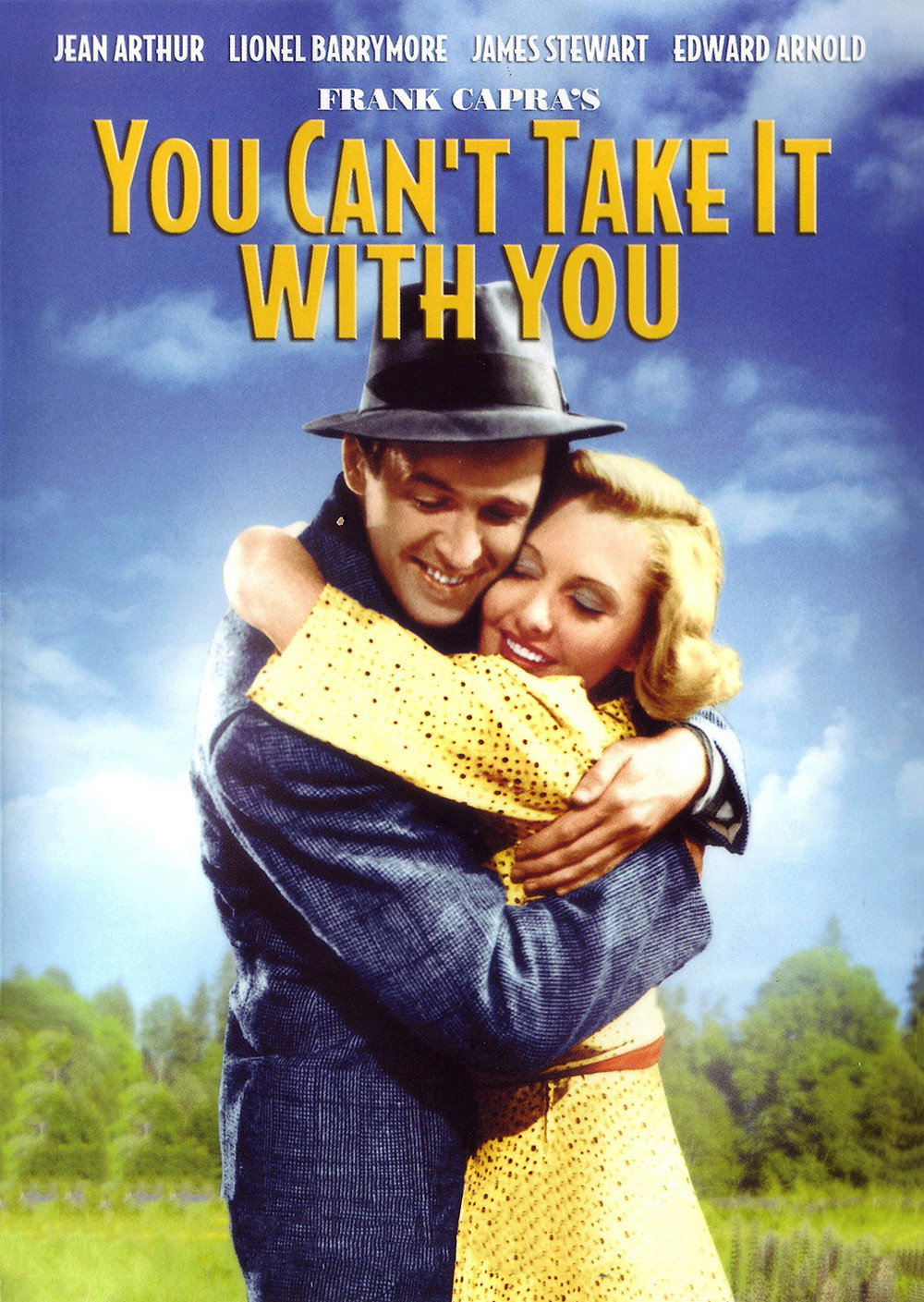
Best Picture Winners: You Can't Take It With You

In keeping with the Best Picture movie posts that I do, and with the Oscars coming up, this movie is another Frank Capra great, You Can't Take It With You, telling the story of a man, Tony Kirby (James Stewart), who comes from a rich family. He falls for a girl named Alice Sycamore (Jean Arthur) whose family is very down to earth yet also very eccentric. They fall in love, but Tony’s family doesn’t approve of her family, and are strongly against him marrying Alice.

When Tony introduces his parents to the Sycamores, they’re embarrassed since the Sycamores embrace life and enjoy things, no matter how weird or spontaneous. Like setting off fireworks, which cause them to get arrested for disturbing the peace. Well the Kirby's are taken to jail along with everyone else, and they go on and on about how these people are fools.

 What I tend to like about Frank Capra movies are the way they deal with the everyman, the ordinary people. Alice's family is really eccentric and very sweet people, and don’t have a lot of money but they’re happy being with the people they loved. Martin Vanderhof (played to perfection by Lionel Barrymore) gives a speech to Anthony Kirby (Edward Arnold), saying he’s a fool and he won't have any friends because all he cares about is money. And that these other people have a few friends and that he was a failure as a father.

Tony ends up walking out on his father because of everything that is going with his big business deal, and the rift it caused in his and Alice's relationship. Anthony starts to see what it means to be the way the Sycamore family is, and that they aren't miserable and unhappy like he thought. So he asks Martin Vanderhof what to do. He wants to fix it and be a better father – so Martin tells him that in a situation like this he plays his harmonica. They end up playing "Polly Walla Do La Day" which is kind of the family song, causing everyone to start dancing. Tony and Alice finally get his father's approval. Mr. Kirby realizes that what matters is being with the people that you love, and being a good father is more important than getting the next big business deal.

It was interesting to learn that Jean Arthur left show business at the height of her career in the 1940s because she was a great comedic actress. James Stewart was quoted as saying: "She was the finest actress I ever worked with. No one had her humor, her timing."

It has all the makings of a Best Picture movie. So I am not at all surprised that it did win in 1938. You Can't Take It With You is a feel good movie that shows that being ordinary isn't so bad, and having a lot of money doesn't make you happy. You're more wealthy if you have friends and family that care.

Friday, January 24, 2014

The Natural

There are a lot of sports movies out there, but none as great or as film noir-ish as The Natural.
The story starts out with a kid, Roy Hobbs, playing baseball with his father. Then as a young man, on a train on the way to try out for the big leagues, he meets a woman in black named Harriet Bird (played by Barbara Hershey), who winds up shooting him in a hotel, effectively ending his potential career in baseball.
The story picks up 16 years later, when an older, quieter and more mysterious Hobbs comes to play for the New York Knights. He's signed on but not wanted because of his age. The grouchy (yet ultimately endearing) manager, Pop Fisher (Wilford Brimley) doesn't let him hit for a long time; he basically spends his time warming the dugout bench.
Then, finally, during one practice, he shows what he's got. After which Roy Hobbs not only becomes part of the team, but he's the star player: Wherein he began, years earlier, as a hopeful pitcher, he's now a home run hitter.


One of the scenes I really liked was when Roy and Iris, who was his girlfriend as a kid, talk again after many years. During his successful turn as the Knight's chief slugger, he had been with someone else... a temptuous "femme fatalle" played by Kim Basinger... who, like the woman who shot him years earlier, also wears black.
But Iris, fitfully adorned in white, goes to one of his games, and they connect again, meeting at a restaurant in a very heartfelt scene providing Robert Redford and Glenn Close a genuine chemistry: like they were made for each other. Whereas he had been in a slump after spending too much time with Basinger's Memo Paris, he's now back on track and helping the Knights win.
The cinematography is really beautiful in the film. I love the lighting and how in the scene where he is playing past the railroad tracks and you can see the ferris wheel in the background, it looks so beautiful.

Another scene that really stood out for me was when Roy was going to play his last game. Iris has a note given to him: saying the boy sitting beside her is his son. This gives him the needed determination, especially after his past injury had begun to reemerge, bringing him into another slump. The note, and the presence of both Iris and their child, is what it took for Roy to be victorious again.
At the end, when he's playing baseball with his son just like he did with his dad at the beginning, is a fantastic parallel that binds the entire story together.
THE NATURAL is very symbolic, deep and engrossing, and yet there's also an uplifting, energetic quality about getting out there and showing that you still have what it takes to be great again.


Iris Gaines: You know, I believe we have two lives.
Roy Hobbs: How... what do you mean?
Iris Gaines: The life we learn with and the life we live with after that.

Wednesday, January 8, 2014

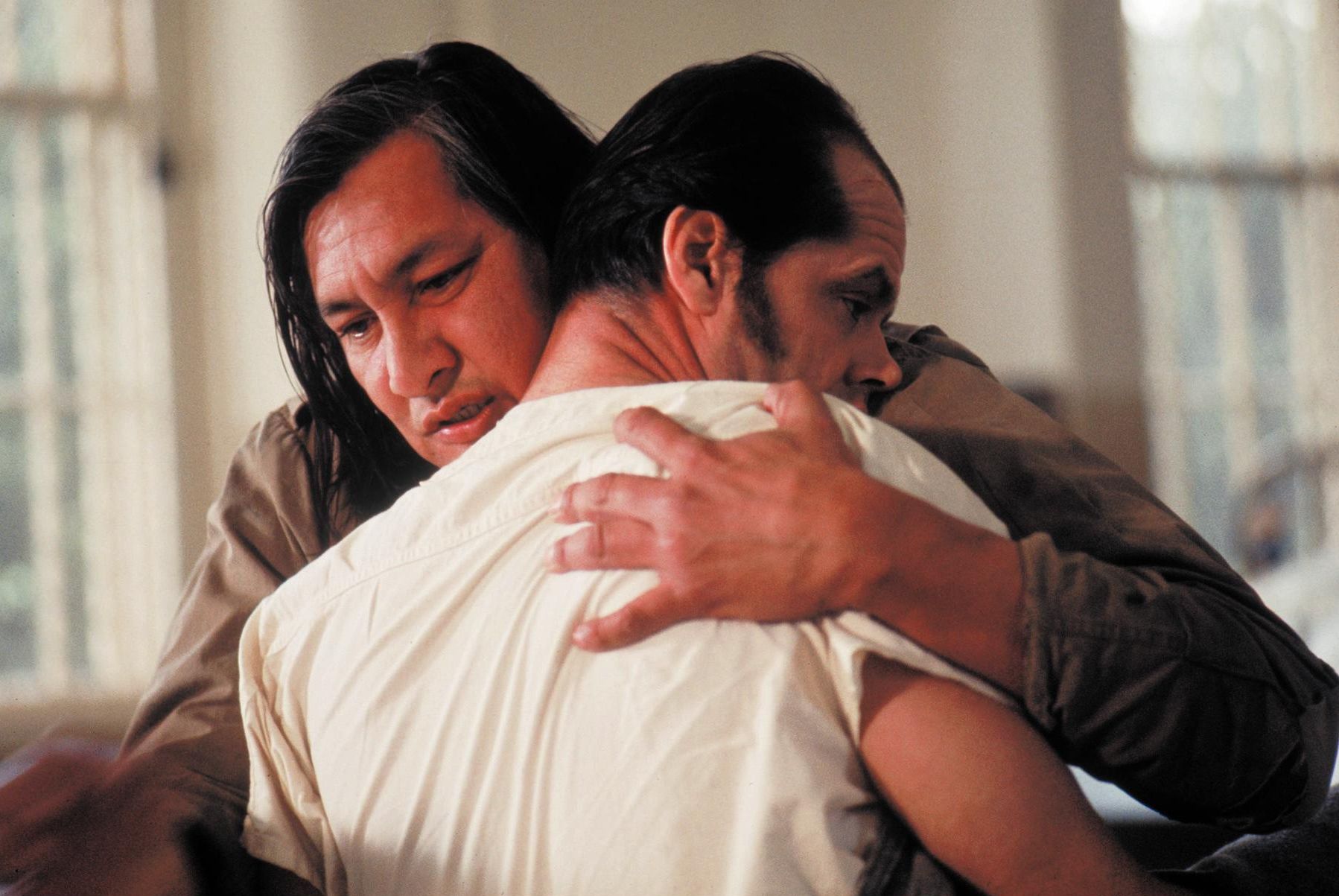
Best Picture Winners: One Flew Over the Cuckoo's Nest


Jack Nicholson has won three oscars, and each performance he plays eccentric and neurotic characters, but in One Flew Over the Cuckoo's Nest, one of the few motion pictures to capture all the top Oscar prizes, he's only acting crazy.
Set in a mental asylum in the early 1960s, somewhere in Oregon, Nicholson's Randal Patrick McMurphy has all the trimmings of a character born to be rooted for. The patients in the ward are so narcassistic it would only take a particular brand of confidence to break them from their shells and that is just what he aims to do, it just won't be easy...
The first task (and pretty much the main task through the whole film) is dealing with Nurse Ratched, played by none other than Louise Fletcher who is a star in her own right. Her gentle disposition makes her really creepy because she is so calm and mellow, masking the fact she's the ultimate control freak. While she is doing her job, the guys, with McMurphy's help, rebel against her. Some of them were afraid, but Cheswick had a fit and wanted his cigarettes. He was tired of her rules and stood up for himself. This was perhaps the first of several small yet important victories against the head nurse: An action taken by one of her usually docile patients and inspired by McMurphy.
An important scene is when McMurphy, after Cheswick's tantrum, crosses the line by breaking into the Nurses' station to get the cigarettes, partly because he just couldn't take his shouting anymore.
Also when he was trying to get everyone to raise their hand so he could watch the World Series was great and Chief raised his hand! That was awesome. He was my favorite by the way. I liked that he was acting deaf and dumb the whole time and he wasn't.


Their friendship was really nice and the fact that at the end, when Chief hugged him and said "I'm not going without you, Mac" was very emotional. And then he suffocated McMurphy with the pillow, which I didn't understand at first, but I do now.
Chief told him that he wasn't going without him, but Mac didn't really understand anyway because he had a lobotomy and his brain was fried. So Chief just killed him out of mercy. And then he took the big sink... the one that McMurphy had attempted to lift earlier on... and threw it out the window.
At this point the patients (especially Christopher Lloyd's character, Tabor) all cheered for the Chief. It was as if he was doing it for McMurphy because he wouldn't be able to anymore.
McMurphy, at least in his mind, might have been the one who flew the nest, but Chief was the one that ultimately got free.


It was really nice seeing McMurphy really get these men to stand up and realize they aren't crazy, and that they can do things like fish and play basketball.
One Flew Over the Cuckoo's Nest, based on a novel by Ken Kesey and directed by Milos Forman (who would win another best director Oscar for Amadeus in 1984) really shows how asylums were back then, and what they did to people and how truly frightening they were. It is definitely an important film and i'm glad that I was able to experience it.

Wednesday, November 13, 2013

Best Picture Winners: The Bridge on the River Kwai


Well, i'm back with another post and it's another Best Picture Winner. I finally got around to see The Bridge on the River Kwai. I ended up watching it because it was the anniversary of William Holden's death, I thought it would be a nice way to honor him by seeing one of his films.

The movie had it's good points. I did like that it showed the conditions in the camps and how they (the Japanese and really anyway that was a POW) were treated. For most of the film I was trying to figure out what was going on and William Holden, amazing actor that he is, I felt should have had more, but he did great with what he was given of course. What he said to the Colonel who was limping, that he didn't care about the bridge, he just wanted them to do this together was great and typical for Holden's characters. It was sad that he died, but it is war and that's what happens. Also after he got rescued, what was his purpose? Just to help with the mission? I mean he did have a job, but it just felt like they held back a bit. (Sorry to take some of your opinions on this James, but I do agree) he died doing the right thing thing though, so that's always nice.

It was funny that Alec Guinness fell on the plunger, but it had to happen some way. He did really shine in the film though, you don't always know where he stands, but the bridge ends up being blown up anyway in the end.

David Lean did a great job of capturing the scenery and the angles that he shot at were good as well (i'm still new with the camerawork and director stuff) and while there were parts where it dragged on, like most epic/war movies do at times, I thought it was a decent film. It did feel like there were things they could have shortened in places and I don't know if it deserved Best Picture, but it is a great movie that deserves to be seen.


Saturday, June 29, 2013

Best Picture Winners: Chariots of Fire


So I watched this a few weeks ago and I was planning on posting a review on it since it is a Best Picture Winner and i'm doing a lot of my posts on those. Anyway, I really enjoyed this film a lot. It was really special and I was really inspired by it.

The determination that they both had, but especially Eric. The speech that he told those people about running the race and faith was just so relevant for me since that same week I had a lesson on that in the girls small group that I am in.

Eric Liddell: You came to see a race today. To see someone win. It happened to be me. But I want you to do more than just watch a race. I want you to take part in it. I want to compare faith to running in a race. It's hard. It requires concentration of will, energy of soul. You experience elation when the winner breaks the tape - especially if you've got a bet on it. But how long does that last? You go home. Maybe you're dinner's burnt. Maybe you haven't got a job. So who am I to say, "Believe, have faith," in the face of life's realities? I would like to give you something more permanent, but I can only point the way. I have no formula for winning the race. Everyone runs in her own way, or his own way. And where does the power come from, to see the race to its end? From within. Jesus said, "Behold, the Kingdom of God is within you. If with all your hearts, you truly seek me, you shall ever surely find me." If you commit yourself to the love of Christ, then that is how you run a straight race.
Really that determination and that spirit comes from within. If you run the race just because you enjoy it and you feel joy when you do it, then I believe that is the mark of a true champion. That's definitely what Eric Liddell did. That's why he won.

I just enjoyed the movie on so many levels. The theme. The message of hope. The inspiration. It made me happy and it definitely deserved to win Best Picture. :)