Friday, February 6, 2015

Best Picture Winners: Patton

Patton is a true story about a man who cared about his country and the troops that he commanded. While he was quite the controversial figure, he is well respected in history as the General who led his men to victory. Although, as seen within this biopic directed by Franklin Schaffner with a script co-written by Francis Ford Coppola - whose Oscar win gave him reign of the Godfather films - Patton wasn't without questionable methods as to how he treated the troops under his strict, abrasive and, in one pivotal scene, perhaps even abusive command.
Patton, the 1970 Best Picture Winner about his military career, deals with the General on and off the battlefield, in and out of backroom meetings, without delving into his personal life before or after the war. He was an intense man with a hot temper. In one scene, he starts firing at a German warplane with his own pistol. It's as if he felt he could win the war alone.
Part of the fun of Patton is witnessing this unpredictable behavior, often balanced by the loyal friendship between Patton and the more even-keeled General Bradley. played by Karl Malden, who could handle and stand by his friend even if he didn't always agree with his methods. Malden brilliantly underscores George C. Scott's mesmerizing performance.
Behind the scenes during the Second World War, General Bradley was probably a lot easier for the Brass to handle, and Patton isn't without his share of detractors. But cinema often provides the last word on legendary figures. Although his methods can be questioned, he was on the right side of history. And whatever you think of General George S. Patton after watching this movie, he was the man important, memorable and downright entertaining enough to base an entire epic motion picture on.

Thursday, January 8, 2015

Best Picture Winners: Lawrence of Arabia


T.E. Lawrence was just a Major in the British Army, and his job was mapmaking. But he wanted to get inside those lines, and was given leave to investigate the progress of the Arab revolt against the Turks during World War I. 

The movie is Lawrence of Arabia and while it is a long movie, it's understandable because it has a lot to tell. For one thing, Lawrence was able to blend into the landscape and being a mapmaker that is kind of symbolic because of what he does for them and he really becomes part of it all even though he wants anonymity when he comes back.

To me the best parts of the film were when they wrecked the train, that was pretty spectacular for the time and now that would all just be done with computers. I also loved the cinematography and I am not surprised that was one of the 7 oscars it won, the director, David Lean captured the scenery so beautifully you felt like you were experiencing it with the characters. The music score was also perfect for the film and used at just the right moments. Sometimes just having an instrumental score is what works well for the film to play in just the right scenes. Then of course, one of Peter O'Toole's best scenes in the movie is when he comes back to England and is telling the General that he killed a man and he kind of enjoyed it. When he turned and looked at the two men, it was so amazing.

One of the things that I also loved and noticed about the film was how relevant it is to a lot of the issues facing the Middle East today. The war and the hate and everything that has been going on, I really felt like this film is something that a lot of people need to see (even they haven't already) it is about unity and working together and I think that's important with all the hate and oppression in our world today.

The downsides to me were mainly that it was just really long and it's hard to sit and watch something for that long of time. I understand that they had a lot to tell and epics to tend to be quite long, but maybe shortening it just a little bit would have been better. That's really the only downside I have.

Overall, I really enjoyed the movie and I feel like everyone gave amazing performances, especially Peter O'Toole since it was his first starring role. It deserved all the oscars that it won. Even though some considered T.E. Lawrence to be rather flamboyant and not very worthy of anything, he truly did make history.

Sunday, July 20, 2014

RIP James Garner

When I heard the news this morning about James Garner's passing, I was very sad because to me he was one of those people that I just always wanted around. Of course that isn't possible, but he was just so iconic and real and I just didn't want it to happen. 

He's been one of my favorite actors for a long time, even before I was really into classic films the way that I am now. The Thrill of It All I think is kind of what sold me on his talent and charm. His facial expressions were priceless and he just had that way of being so real with his characters whether they were funny, dramatic or romantic, you always were intrigued and interested in what he was doing. 36 Hours is one of the great performances from an underrated movie. I think that one is actually one of my favorites. 

Of course The Rockford Files is one of his best TV roles and I remember when I first watched it with my dad (he has the seasons on dvd) and I wanted to see it because I liked him and after I saw it, it made me like him even more than before because I saw how effortless he made it all look. It was almost like he was just playing himself, I mean essentially he was just with a different last name. I think it is probably one of the roles he is most proud of and for good reason. 

Even the movies he did in more recent years like The Notebook where the charm and talent was still there in his later years. Plus all the great actresses he worked with: Doris Day, Julie Andrews, Audrey Hepburn...the list goes on. He has a fine body of work that he left us and he had a big influence on my life. He will be greatly missed. 


Monday, April 7, 2014

Best Picture Winners: Gentleman's Agreement


I'm back with another Best Picture Winner post. This time it's Gentleman's Agreement starring Gregory Peck. I wasn't planning on seeing this today, but it ended up being the perfect opportunity since it is Gregory Peck's birthday... 

Well this movie had a lot to offer and there's a reason why it won Best Picture in 1947. Gregory Peck plays Philip Schuyler Green, a reporter who is given an assignment to cover a story on anti-Semitism. He feels what better way to actually know what it's like to be a Jew than to pose as one, so that is just what he does.

In posing as a Jew, he encounters hate and bigotry right away. His anger at the way he's being treated causes problems in his relationship with Kathy (played by Dorothy McGuire) who is the publisher's niece and the one who suggested the story.

It causes problems because with the "Gentleman's Agreement," which is shared in polite society that the biased attitudes between Christians and Jews is a conspiracy of silence, allowing prejudice to thrive. Kathy is upset by the pretense in order to get at the truth of hypocritical treatment the Jews suffer. The fact that she comes from a Christian Connecticut family causes strain as well.

When Phil's friend Dave (played by John Garfield) comes to town and finds out about Phil posing as a Jew, he warns him that he has let him and Phil's son, Tommy, in for a quiet onslaught of prejudice.

I also really love Celeste Holm's performance as Anne Dettrey. She is so cheerful and then tells Phil how she feels there needs to be action, and how she's tired of being just saying they are tolerant, but don't actually do anything to help the problem, and by doing that it makes it worse. I just really loved seeing how we see this side of the character that wasn't expected.

I love the scene where Elaine Wales, who is the secretary, finds out that he isn't really Jewish and is in fact Christian. That he is the same person as he as always been, but she just knows this about him. He tells her that she can't understand why someone would give up the glory of being a Christian to be a Jew is anti-semitism and that it doesn't matter what the race, it's the person that matters.

That is what I love about these classic films: the fact that these types of issues are addressed and how relevant they still are now. While they were controversial for the time, they are important films to see. They address the things that most people are afraid to talk about, the actors do it with such sincerity and Gregory Peck proves that.

Well Dave ends up talking to Kathy about things and gets to her understand Phil's point of view and they make up at the end.

Gentleman's Agreement is a truly wonderful film and it lets us all know how people and love are what should matter, not what race they are.

Saturday, February 22, 2014

JAG: Each of Us Angels

I have decided to start doing TV posts along with my movie reviews because I am very knowledgeable with TV. For the most part I watch a lot more TV shows than I do movies, and wanted to write about episodes that speak to me, or that need to be written about because they're so good.

Since JAG is a military show, there are episodes that pay tribute to past wars. This particular episode, "Each of Us Angels", does just that by honoring the Navy Nurses during World War II. The episode is told through flashbacks to the time of The Battle of Iwo Jima in 1945. Taking place on a ship offshore, the story is shared by an elderly man to a young girl.


The Navy Nurses would fall for the soldiers that were brought in, and the man whose name is Ron Graham (David James Elliott plays young Lt. Graham) goes to the Arlington National Cemetery to put flowers on the grave of the Nurse who he fell in love with. He sees this young girl there and shows her a picture of the nurses, and that’s when he tells her the story. Ens. Beverly Tromatore (the woman that Ron falls for) takes a particular interest in Ron. She talks to him and tells him to wake up…

When he does, he remembers her. One of the men that was part of his group was severely burned, and ends up dying. Ron feels like he will lose whoever he cares about or tries to protect, which is why he’s hesitant (at first) to be with Beverly. She basically tells him that she is her own person, and doesn't need him to carry her because, as she tells him: "I don't need you to carry me. I can walk with you." Leading into a Luciano De Crescenzo quote that the title of the episode comes from. “We are each of us angels with only one wing, and we can only fly by embracing one another.” After Beverly says that quote to Ron, he takes a chance and they kiss.


Then, all of a sudden, a plane crashes right into the deck. They scramble to get people to safety, and while Beverly is turning off the oxygen tanks, a shelf falls on her and she doesn't make it. I think they really captured the essence of war and loss during the time. He is happy that he knew her for the short period that he did, and still comes and pays his respects every year because she meant so much to him. Then his grandaughter comes to the cemetery. She tells the girl who heard the story that she is going to be a military nurse as well.

I am glad that they were able to pay tribute the way that they did for those nurses who were dedicated to saving lives, and being there for the soldiers as well.

Saturday, February 1, 2014

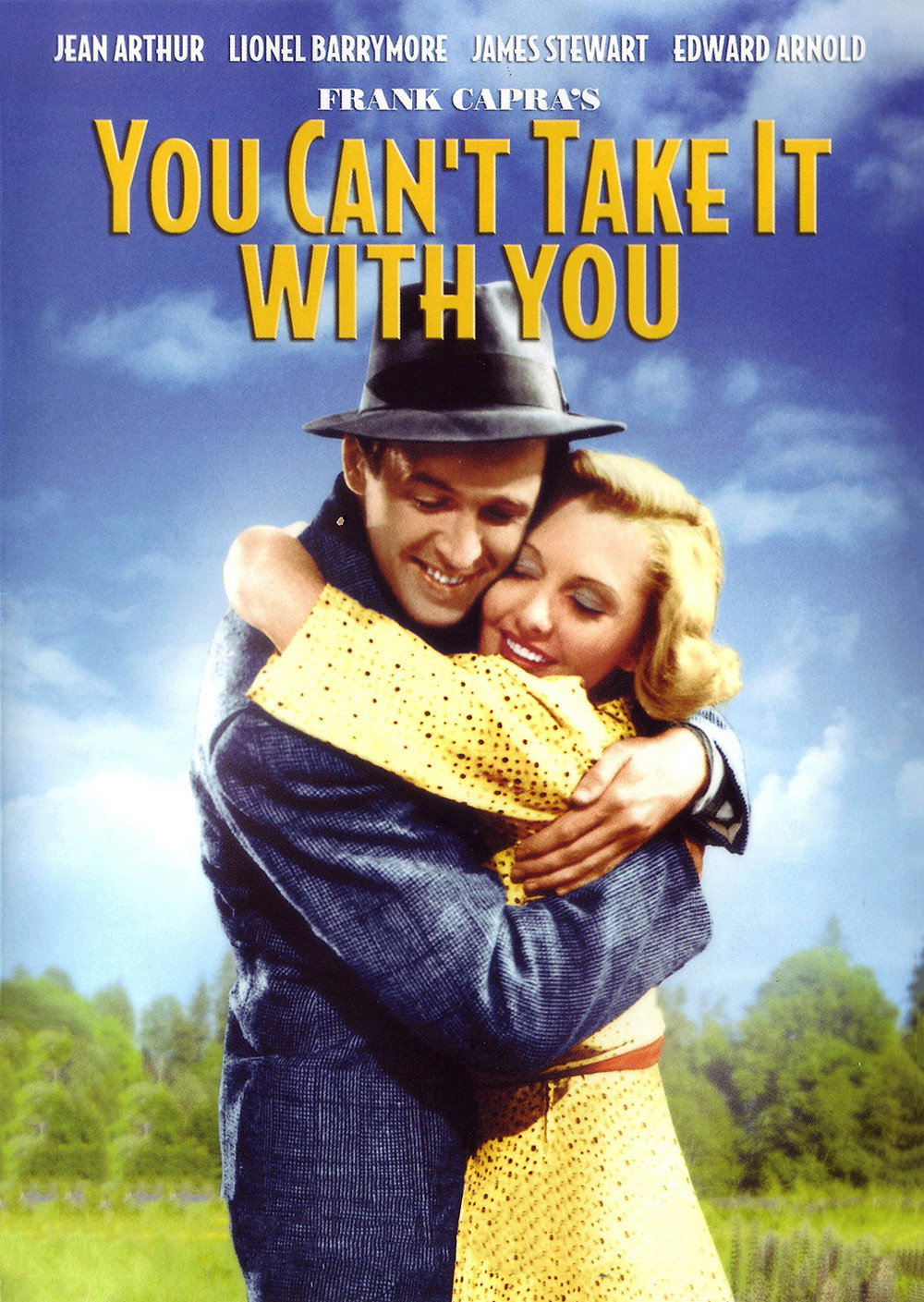
Best Picture Winners: You Can't Take It With You

In keeping with the Best Picture movie posts that I do, and with the Oscars coming up, this movie is another Frank Capra great, You Can't Take It With You, telling the story of a man, Tony Kirby (James Stewart), who comes from a rich family. He falls for a girl named Alice Sycamore (Jean Arthur) whose family is very down to earth yet also very eccentric. They fall in love, but Tony’s family doesn’t approve of her family, and are strongly against him marrying Alice.

When Tony introduces his parents to the Sycamores, they’re embarrassed since the Sycamores embrace life and enjoy things, no matter how weird or spontaneous. Like setting off fireworks, which cause them to get arrested for disturbing the peace. Well the Kirby's are taken to jail along with everyone else, and they go on and on about how these people are fools.

 What I tend to like about Frank Capra movies are the way they deal with the everyman, the ordinary people. Alice's family is really eccentric and very sweet people, and don’t have a lot of money but they’re happy being with the people they loved. Martin Vanderhof (played to perfection by Lionel Barrymore) gives a speech to Anthony Kirby (Edward Arnold), saying he’s a fool and he won't have any friends because all he cares about is money. And that these other people have a few friends and that he was a failure as a father.

Tony ends up walking out on his father because of everything that is going with his big business deal, and the rift it caused in his and Alice's relationship. Anthony starts to see what it means to be the way the Sycamore family is, and that they aren't miserable and unhappy like he thought. So he asks Martin Vanderhof what to do. He wants to fix it and be a better father – so Martin tells him that in a situation like this he plays his harmonica. They end up playing "Polly Walla Do La Day" which is kind of the family song, causing everyone to start dancing. Tony and Alice finally get his father's approval. Mr. Kirby realizes that what matters is being with the people that you love, and being a good father is more important than getting the next big business deal.

It was interesting to learn that Jean Arthur left show business at the height of her career in the 1940s because she was a great comedic actress. James Stewart was quoted as saying: "She was the finest actress I ever worked with. No one had her humor, her timing."

It has all the makings of a Best Picture movie. So I am not at all surprised that it did win in 1938. You Can't Take It With You is a feel good movie that shows that being ordinary isn't so bad, and having a lot of money doesn't make you happy. You're more wealthy if you have friends and family that care.

Friday, January 24, 2014

The Natural

There are a lot of sports movies out there, but none as great or as film noir-ish as The Natural.
The story starts out with a kid, Roy Hobbs, playing baseball with his father. Then as a young man, on a train on the way to try out for the big leagues, he meets a woman in black named Harriet Bird (played by Barbara Hershey), who winds up shooting him in a hotel, effectively ending his potential career in baseball.
The story picks up 16 years later, when an older, quieter and more mysterious Hobbs comes to play for the New York Knights. He's signed on but not wanted because of his age. The grouchy (yet ultimately endearing) manager, Pop Fisher (Wilford Brimley) doesn't let him hit for a long time; he basically spends his time warming the dugout bench.
Then, finally, during one practice, he shows what he's got. After which Roy Hobbs not only becomes part of the team, but he's the star player: Wherein he began, years earlier, as a hopeful pitcher, he's now a home run hitter.


One of the scenes I really liked was when Roy and Iris, who was his girlfriend as a kid, talk again after many years. During his successful turn as the Knight's chief slugger, he had been with someone else... a temptuous "femme fatalle" played by Kim Basinger... who, like the woman who shot him years earlier, also wears black.
But Iris, fitfully adorned in white, goes to one of his games, and they connect again, meeting at a restaurant in a very heartfelt scene providing Robert Redford and Glenn Close a genuine chemistry: like they were made for each other. Whereas he had been in a slump after spending too much time with Basinger's Memo Paris, he's now back on track and helping the Knights win.
The cinematography is really beautiful in the film. I love the lighting and how in the scene where he is playing past the railroad tracks and you can see the ferris wheel in the background, it looks so beautiful.

Another scene that really stood out for me was when Roy was going to play his last game. Iris has a note given to him: saying the boy sitting beside her is his son. This gives him the needed determination, especially after his past injury had begun to reemerge, bringing him into another slump. The note, and the presence of both Iris and their child, is what it took for Roy to be victorious again.
At the end, when he's playing baseball with his son just like he did with his dad at the beginning, is a fantastic parallel that binds the entire story together.
THE NATURAL is very symbolic, deep and engrossing, and yet there's also an uplifting, energetic quality about getting out there and showing that you still have what it takes to be great again.


Iris Gaines: You know, I believe we have two lives.
Roy Hobbs: How... what do you mean?
Iris Gaines: The life we learn with and the life we live with after that.